In August 2025, Cracker Barrel introduced a simplified logo as part of a broader effort to refresh the brand. The new mark removed the familiar “Old Timer” figure. Public criticism arrived quickly, and the company announced within days that it would return to the previous logo.
The reversal became an easy story about bad design. That conclusion is too simple.
NWC did not advise Cracker Barrel and has no visibility into its internal research, governance, or decision process. We cannot diagnose the organization from the outside or claim that one assessment would have prevented the response.
We can use the public sequence to ask a better question: what must an organization understand and align before it changes a symbol customers use to recognize themselves in the brand?
A visible change tests the system behind it
A logo is a small artifact with a large network around it. It carries memory, customer expectation, leadership intent, employee explanation, physical application, and media interpretation.
When a company changes that artifact, several parts of the organization must work together:
- Leaders need a shared reason for the change.
- Customer evidence must distinguish familiarity from resistance.
- Employees need language that connects the new expression to the existing promise.
- Operating and guest-experience changes must support the same direction.
- Governance must define what evidence would cause the organization to adapt.
The quality of the artwork cannot compensate for a weak connection among those parts.
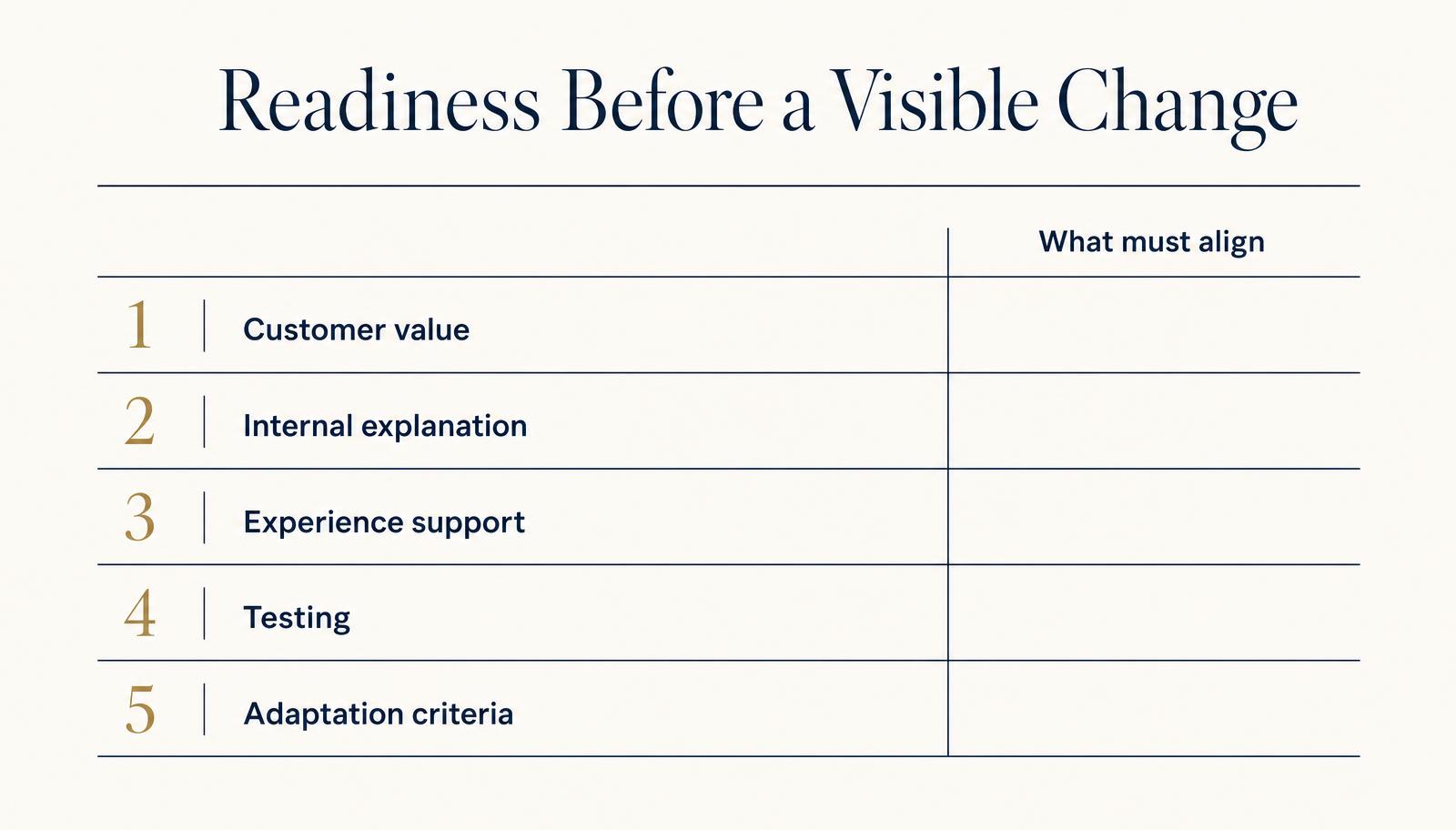
Five readiness questions before a public change
1. What customer value are we protecting?
Cracker Barrel’s own history describes the Old Timer as a symbol of warmth, authenticity, and neighborly hospitality. That does not make every visual element permanent. It does mean leaders should understand which part of the symbol customers believe carries the promise.
The useful research question is more specific than “Do you like the new logo?” Ask what customers believe they would lose, what they hope will improve, and which cues help them trust that the underlying experience will remain.
2. Is the internal explanation consistent?
Employees and partners are often the first people asked to explain a visible change. If leaders tell different stories about why it is happening, the public receives those differences immediately.
Readiness means the organization can name the problem, the intended change, and the commitment that will remain. The explanation should hold in a restaurant, a customer-service exchange, an investor conversation, and a media interview.
3. Does the experience support the new expression?
A visual refresh creates an expectation. If the customer experience changes in a different direction—or does not change at all—the brand begins making two claims.
Leaders should map the promise through the operation. What will guests encounter in the store, menu, service, digital experience, and follow-up? Which parts are changing now, and which are not? Where might a customer read inconsistency as abandonment?
4. What has been tested, and with whom?
Testing is useful only when the sample represents the decision. A loyal customer, an infrequent visitor, a younger target customer, a front-line employee, and a franchise or operating partner may each reveal a different risk.
The point is not to seek unanimous approval. It is to understand the tradeoff before launch and decide which response the organization is prepared to carry.
5. What evidence would make us adjust?
Reversal is sometimes responsible leadership. The damage comes when the criteria for changing course are invented after pressure arrives.
Before launch, establish what will be monitored, who will interpret it, who owns the decision, and which conditions warrant refinement, pause, or reversal. That governance allows the organization to respond without looking directionless.
Readiness is not the absence of resistance
Meaningful change often creates disagreement. A mature organization does not avoid that tension; it prepares to interpret it.
Some resistance protects genuine customer value. Some reflects unfamiliarity. Some signals that the organization has not connected the new direction to the promise people already trust. Leaders need enough evidence and alignment to tell the difference.
NWC uses the Holistic Maturity Model™ from MaturityOS as one instrument in diagnostic work. It helps leadership teams examine Culture, Capability, and Continuity before a consequential initiative. The assessment does not predict every response. It creates a shared view of where the organization is ready, where assumptions need testing, and which conditions should be strengthened first. A holistic view of strategy and operations shows how the parts of the business must carry the plan together.
The lesson is larger than the logo
Cracker Barrel’s public reversal shows how quickly a visible artifact can expose a gap between leadership intent and stakeholder meaning. The same readiness questions apply to a new strategy, operating model, acquisition, market entry, or leadership transition.
Before changing how the organization is seen, understand what the change asks the organization to carry. Protect the value that should remain. Align the people responsible for making it real. Decide how you will learn and adapt. Whether the change is a brand refresh or a full business transformation, readiness is what keeps the story credible while the way of expressing it changes.
That is how a business keeps its story credible while changing the way it expresses it.
If your organization is preparing for a consequential change, explore NWC’s organizational maturity assessment or start a conversation about readiness.
Sources for the public facts
Cracker Barrel: company history and the meaning of the Old Timer. Cracker Barrel
Cracker Barrel’s August 2025 rebrand, and the reasoning behind it. Associated Press
Cracker Barrel returning to its traditional logo after the redesign backlash. Associated Press